Agri Lending
Finance for farm purchases, equipment and seasonal working capital
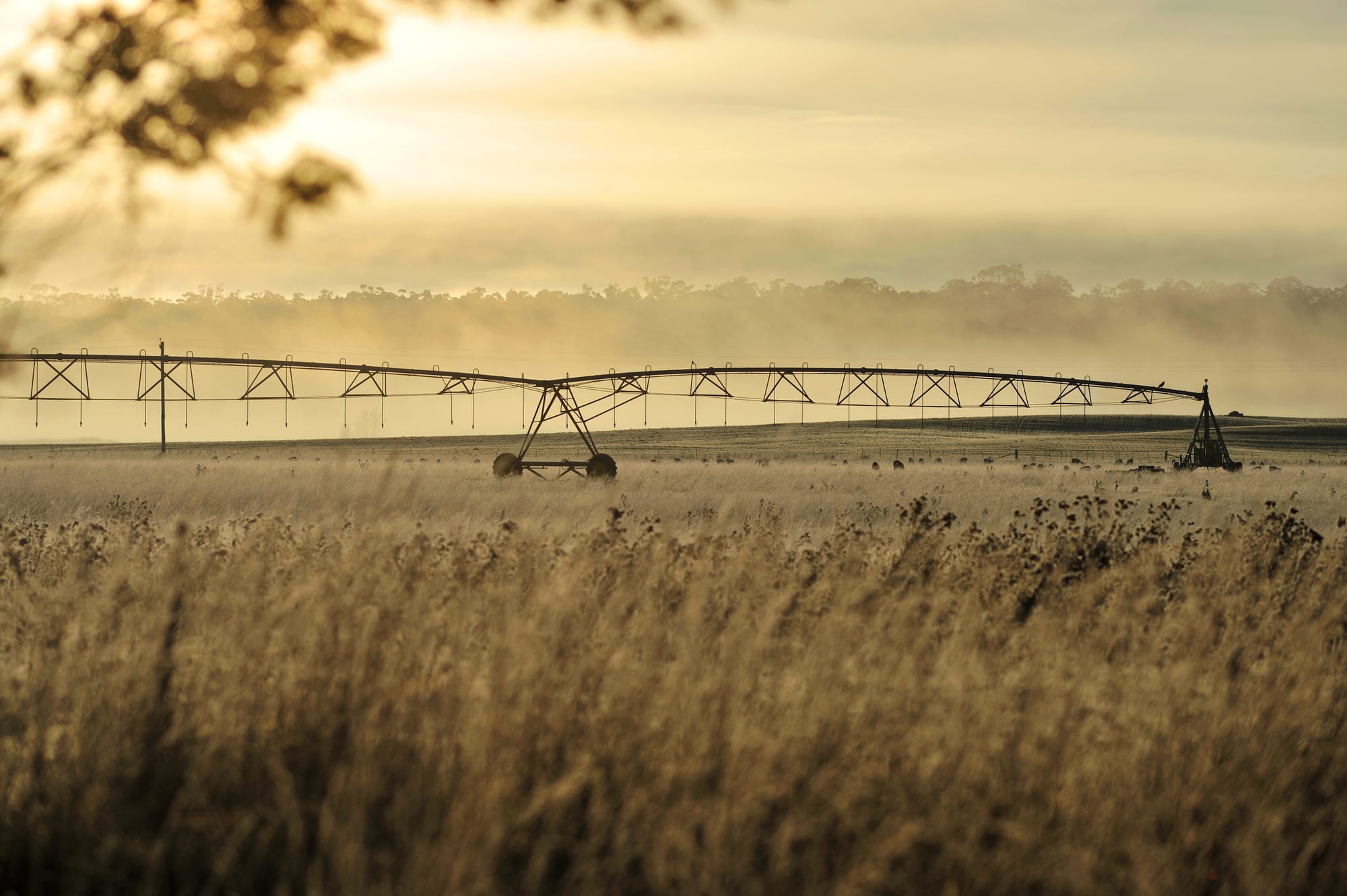
Lenders often assess farm lending on the operation, the land and the season rather than on a standard income template, and each lender does this differently. Oakwood Finance arranges agricultural and rural lending with that in mind, including for rural and regional properties.
We work with farming families and businesses, long established or new, comparing lenders that write rural loans and arranging the finance around how and when the farm earns. All lending is subject to lender assessment.

What we do on a farm or rural file
On a rural file, we start by understanding how the farm earns, and when. We usually ask for the farm entity’s financial statements and tax returns, details of existing debt including equipment finance, title and water entitlement information, and a picture of the seasonal cash flow.
With that in hand, we compare lenders active in agriculture and raise concessional programs where they may be relevant. We coordinate with your accountant, stay in touch with the lender about its valuation, and prepare and lodge the application. The lender decides, subject to its assessment.
To discuss a purchase, equipment or working capital for the season, book a time with a broker or contact us.


We arrange finance for the main things a farm business needs to fund:
- Land and expansion. Buying a property or the adjoining block, assessed by the lender against the land and the operation.
- Machinery and equipment. Tractors, harvesters, vehicles and other plant, where the lender allows the term to reflect the asset’s working life.
- Seasonal working capital. A line or overdraft for inputs. Where the lender allows, repayments can be structured around when the farm earns.
- Existing debt. A review of the term loans, equipment finance and overdraft you already hold, and whether they still fit how the farm earns.
Each is subject to lender assessment. Deposit requirements and repayment timing differ between lenders and facilities, so we confirm them with the lender before you commit.
Lending that understands a season
Rural lending goes wrong in two predictable ways: the country is valued by someone who reads comparable sales rather than carrying capacity, and the repayments are written monthly when the income arrives seasonally. Both are avoidable, and both come down to putting the file in front of a lender that actually does agriculture.
How the security is assessed
A proper rural valuation looks at productive capacity (carrying capacity, arable hectares, soil type, rainfall, water and infrastructure), not just what the neighbour’s block sold for. Water can be a substantial asset in its own right, and whether the entitlement is attached to the title or held separately materially changes what can be lent against it.
Loan to value ratios run more conservatively than residential, and tighten further for holdings that are very large, very remote or single-purpose. A small acreage with a house near town is assessed almost as residential; a remote broadacre property is not.
Structuring around cash flow
Farm income does not arrive monthly, so a facility demanding monthly principal and interest is usually the wrong shape. A working structure generally pairs a term loan against the land with a seasonal overdraft or line for inputs, and repayments timed to harvest, turn-off or the milk cycle.
Lenders active in agriculture understand this and may write annual or seasonal schedules, subject to their own policy. Lenders who are not may fit you to a commercial template and then take issue with your cash flow when it does not match that template. Lender choice matters more here than in almost any other category of lending.
Concessional programs worth checking first
Government concessional programs for farm businesses may be available at federal and state level, including in drought-declared areas. Each has its own criteria, timing and terms, set by the body that runs it, and whether a program is available is for that body to decide.
If a concessional program looks worth enquiring about, we will say so, including where that means looking at it before a facility we would otherwise arrange.
An illustrative worked example
An illustrative example of how a file like this can be approached. It is not a client outcome, and no result is implied. This is general information only, not credit assistance, a quote or a recommendation. Every structure depends on individual circumstances, lender credit policy and approval. Oakwood arranges credit through its lending partners; all lending is subject to lender assessment and approval.
Worked example · Expanding a family farming operation
Buying the neighbouring block without choking working capital
Structure to consider: term debt against the land plus a seasonal overdraft
The situation. A family operation has the chance to buy an adjoining property that comes up rarely. It makes agronomic sense: shared water, shared machinery, no additional overhead.
The complication. A valuation arranged through a lender with little agricultural experience can come in well under expectation if it leans on thin comparable sales rather than productive capacity and gives the water entitlement little weight. A repayment schedule written monthly can also fail to match the operation’s actual income pattern.
What we would look at. Whether the file should go to a lender with a policy for agricultural lending, and asking for a valuation that assesses carrying capacity and water on their own terms. Structuring term debt against the land with a seasonal overdraft alongside for inputs, and asking for repayments timed to income rather than the calendar. Any concessional program worth enquiring about would be raised first, before a commercial facility is arranged, even if the program turns out not to be available.
What the example shows. In rural lending the valuation and the lender’s agricultural experience matter as much as the structure, and pairing term debt with a seasonal facility is meant to keep working capital available through the season. Each lender decides its own valuation, ratio and terms.